Waste Collection Safety: Traffic, Ergonomics, Needlesticks, and Biohazards
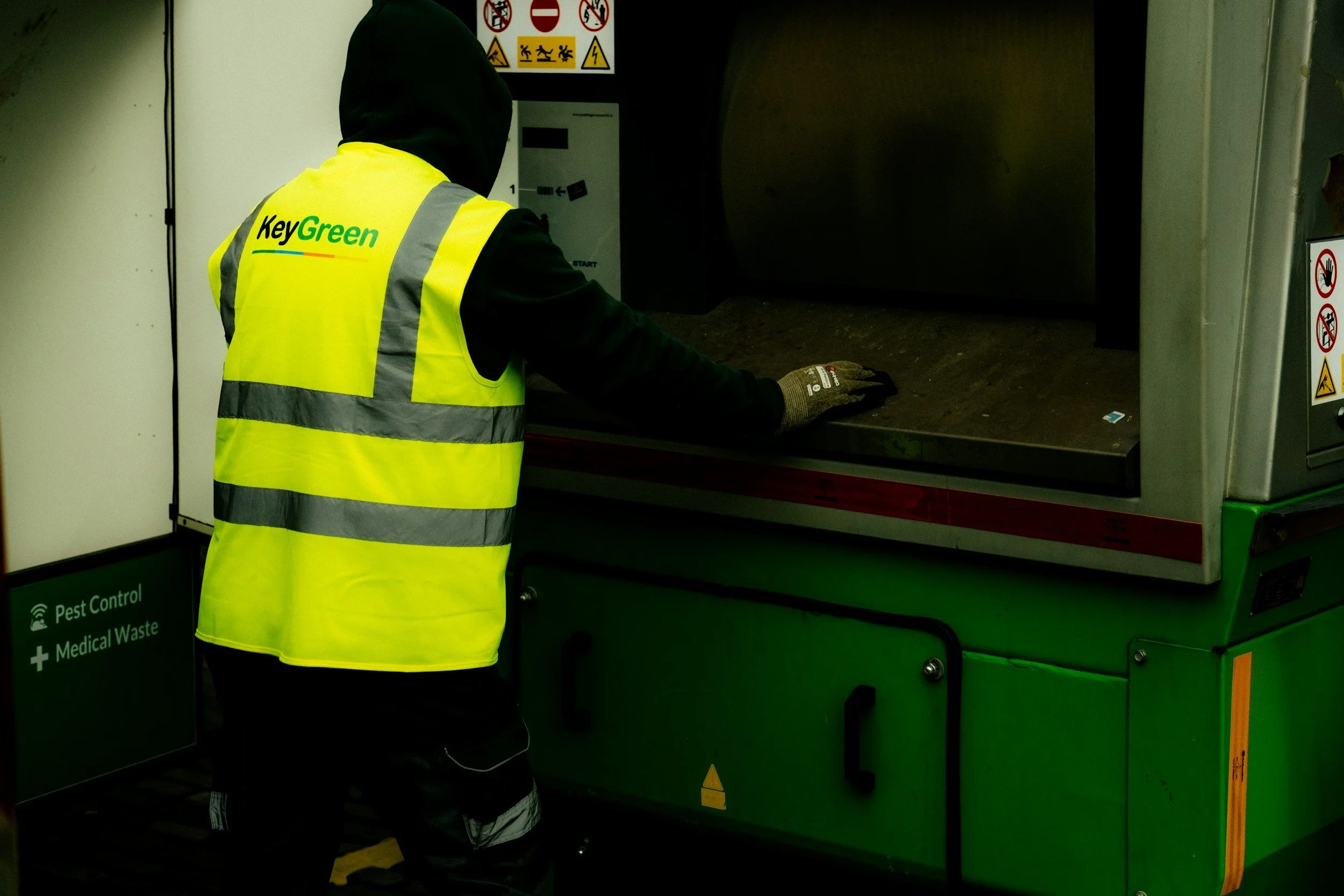
Reduce injury risk by controlling traffic exposure, MSIs, and biological hazards including sharps.
CCOHS notes waste collection work occurs close to vehicle traffic at relatively high speeds and involves jumping on/off trucks and handling heavy, awkward loads, creating significant ergonomic and traffic risk. CCOHS also lists hazards including needlestick/sharp injuries, biological exposure, dust/metals/asbestos, and slips/trips/falls. This is a “multi-hazard” job requiring layered controls.
Traffic control should include route planning, backing controls, spotters where needed, visibility requirements, and work procedures for roadway exposure. High-visibility apparel expectations and separation principles should be applied similarly to other roadside work. Ergonomic controls include bin-handling techniques, equipment aids, and task rotation.
Because contents are often unknown, CCOHS notes workers should treat all items as hazardous unless determined otherwise, reinforcing the importance of PPE and safe handling procedures. Implement and verify sharps-handling procedures and post-exposure reporting pathways.
-
Control traffic exposure via route/backing procedures and visibility; implement ergonomic controls and verify lifting practices; treat unknown waste as hazardous and enforce sharps/PPE procedures.